

Powerscaling: Fiction's Kayfabe
Taking a look at Shonen's wrestling roots to understand the power of Powerscaling

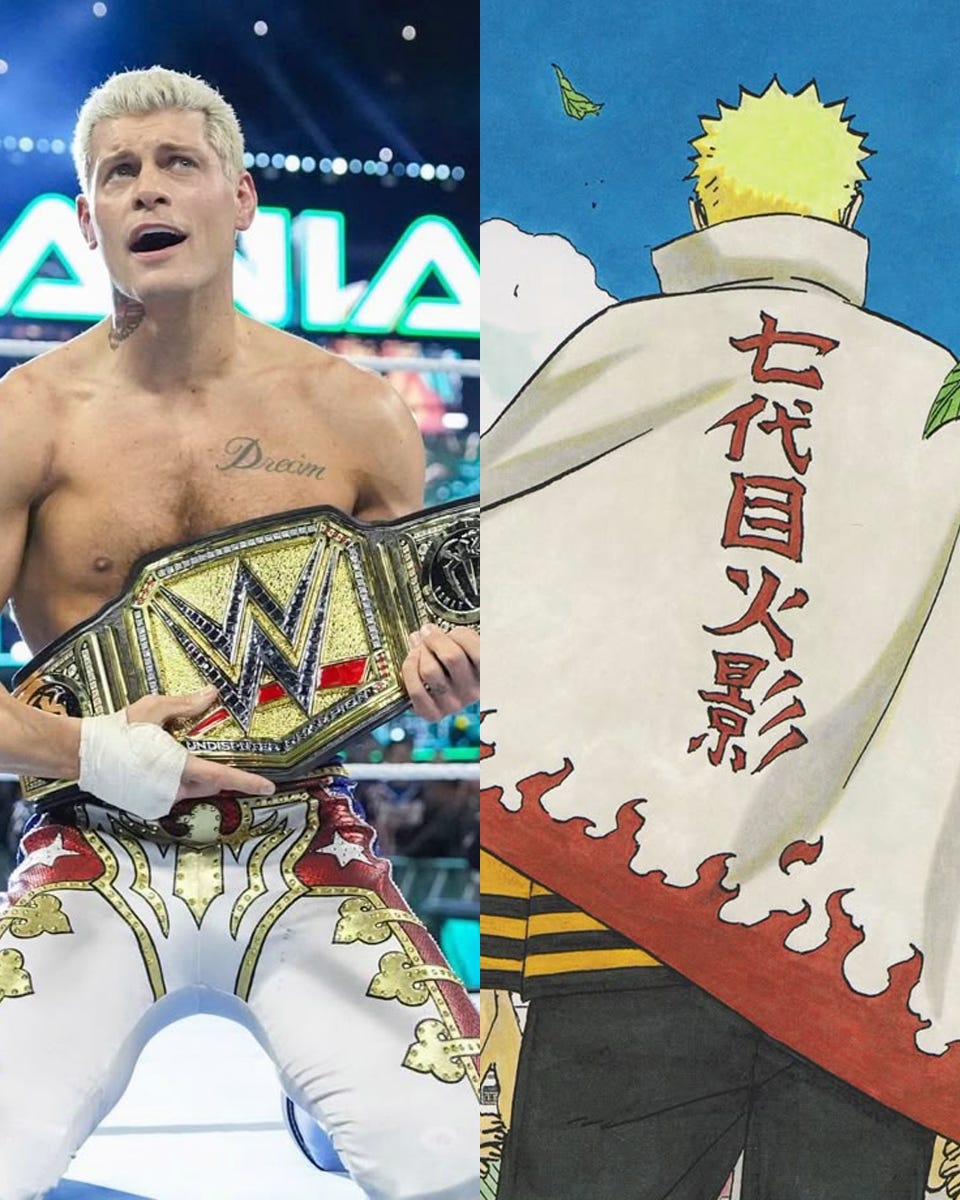
‘You know it’s fake, right?’
The line every Professional Wrestling fan knows too well. Spoken in that moment when a family member or coworker descends down and gracefully bestows the knowledge onto you that the shows you’ve spent years watching- you know the ones of oily men throwing each other into tables- actually aren’t real. Thank you Uncle. I had no idea.
You know it’s fake. We all do. Yet, as you would with any other piece of theatre, you suspend your disbelief; you know deep down that Luke Skywalker isn’t a magical space sage but an actor, acting. Similarly when you go to a wrestling match, you’re expected to suspend your disbelief once, and leave it at the door. After that though, you aren’t expected to suspend it again. The watcher and the wrestler enter an unspoken contract. That of ‘Kayfabe’. The tacit agreement to treat all of it as if it were real.
This contract comes with its bylaws. Wrestlers ‘sell’ moves, to make sure that they look like they hurt, even if they don’t. They cover up their communication, so it’s not obvious that they’re secretly friends. And they never, ever say that things aren’t real. Even though we all know that they aren’t.
Beyond page 1 of the contract, though, exists a subtler set of rules. These are rarely spoken about yet prop up the tenuous contract between watcher and wrestler. The one I’m focusing on today is the idea that some wrestlers are stronger than others, and how that needs to be the case for the story to work.
For a wrestling match to seem compelling, the fight needs to seem real. For the fight to seem real, the stakes need to seem real. The stakes, in turn, are influenced by the perceived strengths of both fighters. If one fighter isn’t on the level of the other and if that fighter wins without a compelling reason given, the win feels unearned. The logic of the story collapses.
Take two wrestlers you probably know. John Cena and The Rock. In the build-up to their fight against each other in 2012, their clash was seen as being near the apex of what a fight could be. This was because each fighter was seen as a behemoth. They’d spent years being built up, showing their strength by consistently beating other strong fighters. Over time each character gained weight. Since the Rock and Cena had risen in separate trajectories, the Rock’s time coming before Cena’s, the prospect of them colliding felt monumental. Two fighters, the peak of the art, going head to head.
Now. Imagine if a regular wrestler had been able to come out from the locker room, and fight with both of them as equals without a valid explanation. Just in the middle, beating both of them up. It wouldn’t make sense? These names had time and effort put into building them up. Now this guy can just come in here and fight with them as equals? It would ruin the stakes of the fight. If anyone can just beat anyone, then what’s so special about this occasion? It would seem fake.
Remember, the fight is fake! We all know it is. But it can never seem fake. If that’s the case, then we have no reason to continue watching. There is no internal logic to the fight, we’d have no reason to follow.
It is these internal rules that make us able to treat a fake fight as if it was real. In wrestling this is called ‘Kayfabe’. In fiction, this is called ‘Powerscaling’.
Powerscaling is the articulation of the previously unspoken rules that keep fiction running. When you shoot a normal person in the head, that person should die. If they don’t, a proper explanation needs to be given, or the internal logic of the narrative collapses. The term Powerscaling emerged from internet forums where the power levels of characters were compared in what, yes, often can be a dick-measuring contest. That said, it does speak to something real within a narrative. The abilities of characters, things like their strength or their intelligence, should seem real, even if we know that they aren’t.
Powerscaling is typically brought up within the context of anime and manga- specifically Battle Shonen. That makes sense, considering that Battle Shonen itself is intertwined with what the Japanese call Puroresu. Professional Wrestling.
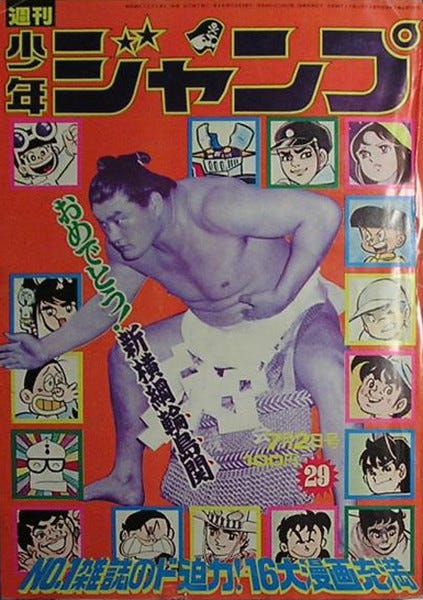
A 1973 Cover of Weekly Shonen Jump- With Mangizer Z on the back of a Professional Wrestler
Puroresu and Battle Shonen share a storied history. We can look at the narrative structure of a foundational Battle Shonen manga- Dragon Ball. The main character goes away, while a villain terrorises his friends until his return, wherein he defeats the villain and gains the adoration of his friends. That mirrors the structure of Rikidozan’s fights. Rikidozan being the Godfather of Japanese wrestling, an icon revered to this day- even after he was murdered by a member of the Yakuza in 1963.
After his death, his students Antonio Inoki and Giant Baba took over. These icons split Japanese wrestling down the middle. Like their master, their influence found its way back to Battle Shonen. In Weekly Shonen Magazine, Tiger Mask was published, a story about Puroresu which regularly included real-life professional wrestlers, like Inoki and Baba.
Then, a decade after the series had ended, NJPW (New Japan Pro Wrestling) debuted a character called Tiger Mask, based off the manga. Tiger Mask went on to be one of the most beloved wrestlers in the promotion- inspiring a legacy of masked Japanese wrestlers which endures to this day. Both worlds gave and took from each other.
Indeed, you could argue that Puroresu helped to build the foundation for what modern Battle Shonen is. Jujutsu Kaisen built off manga like Naruto and Bleach, which built off manga like Dragon Ball, which built off wrestlers like Rikidozan.
Battle Shonen has been built on Puroresu foundations, and Puroresu has drawn from Battle Shonen. We can see this in the Kayfabe of Battle Shonen. Fighters have to justify their strength. They can say they’re strong, but they are only truly perceived as strong once they prove it, often by defeating another strong character. Think of how Kakashi from Naruto is often defeated to show that, this time, the villain is no joke. This effect, dubbed ‘the Worf effect’- after the character from Star Trek who was often sacrificed in a similar way, happens throughout Battle Shonen. Kakashi, Piccolo, Byakuya. Strong characters, used to elevate stronger characters. They are built up, often above the protagonist. The story then becomes about ‘ok, how does our protagonist get strong enough to defeat them’. Whether that be a training arc, being gifted some sort of power or being pushed forwards mentally in a way that their opponent isn’t. Often, the journey to get that power is where the story is held: the process of the character learning how to become strong, or to uncover the internal strength they already had.
This doesn’t work if there is no internal logic to the story. Power levels cannot be arbitrary, otherwise the villain doesn’t feel like a threat. If the villain doesn’t feel like a threat, the stakes are diminished, the journey we go through seems pointless. If the protagonist defeats the villain without a compelling narrative reason for their increase in power- the win too, feels cheap.
This doesn’t mean that Battle Shonen always sticks to a dry Kayfabe though. While Kayfabe, Powerscaling is foundational to the genre, it is sometimes broken. In the same way that a jazz musician may make the conscious choice to break a musical ‘rule’ with which they are an expert in. It’s a conscious choice used to do something special with a moment. My favourite example of this in Battle Shonen comes from the series Naruto.
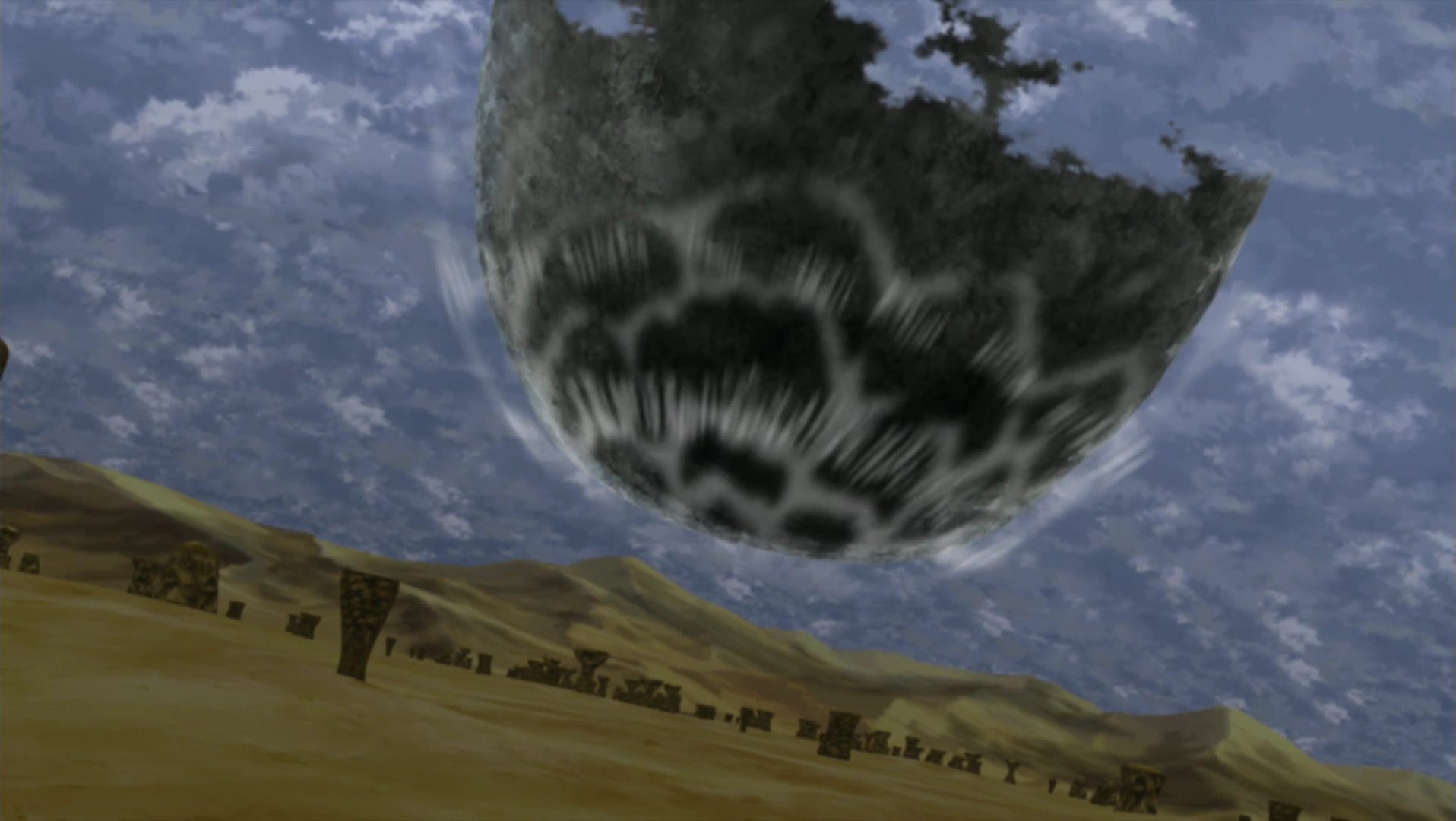
Early Naruto is famous for having a very tight Powerscaling system. Early on, while there were different tiers of power, it felt like anyone in one tier could reasonably stand a chance against anyone else in it. Fighters had specific skillsets, and fights were often about how those skillsets interacted instead of raw power levels. Take the character of Pain, for me, probably the peak of Powerscaling in the genre. A character who feels otherworldly, untouchable. Yet, he can be touched by minor characters such as Konohamaru and Chōza. They could never beat him, and yet they fought on the same field. It was an incredible balance which helped to make Pain such a compelling villain. It helps, too, that his power was proved by him making short work of Naruto’s sensei- Kakashi and Jiraiya.
Kishimoto spent years building this system up. Making it so fights, for the most part, felt like they could go any way, while also feeling earned in their result. Making it so the extended cast of characters were all potentially relevant.
Then, Madara.
Madara had been built up for a long time prior. We see him mentioned in chapter 309. His first appearance comes in Chapter 559. There’s about 5 years splitting the two. He was built up incredibly. The Valley of the End is where Sasuke and Naruto have their first clash, and this valley was formed after his fight with Hashirama. When talking to Sasuke, Kurama mentions how Sasuke has shades of Madara. Sasuke’s brother, Itachi, mentions Madara to Sasuke in their final clash. Tobi takes on the name of Madara, and uses it to declare a Fourth Great Ninja War. He was mythologised again and again before arrival.
And when he does arrive, he’s met by a battalion of shinobi from across the five nations. They all charge at him, he charges at them, solo. Pain was otherworldly, but theoretically touchable. Madara was nothing of the sort. He rampaged through the battalion before, stepping back and collapsing a meteor onto them. With all the efforts of the battalion, they effectively halt its fall. Until Madara asks them what they’ll do about the second one, the clouds parting to show another.
A point is often made about Naruto ‘being a story about ninja’ before it being lost in these grand displays. I believe this is overplayed. A Kaiju battle is described in the first page of the manga. Still, it touches on something real. At this moment, Kishimoto intentionally breaks Kayfabe. He introduces a character so far beyond the power level of the story up to this point, that he seems to defy the rules previously set. You feel real terror, real threat at the prospect of Madara. While I disagree with the sentiment, you do understand why, a decade on, people still say ‘Kishimoto introduced Kaguya (the villain that comes after Madara) because he didn’t know how to defeat Madara’. To the average viewer, he was untouchable.
Indeed, regular Kayfabe never enters the story again. The previous side cast of characters gets mostly sidelined in the process. Here, I believe Kishimoto was making a point to shift slightly from the Puroresu characteristics that had defined his story. Instead, he leans further into the folk tale aspects of Naruto. The fights that follow Madara’s appearance have the peaks of mountains sliced off, characters assuming great avatars, entering different worlds and dimensions. In many ways, it shares more with the battles between gods you would see in A Journey to the West than it does with Rikidozan. Gaara, at the kage tier, supposedly the peak of what a ninja can be, seems to see it too. When viewing Madara’s meteor fall he doesn’t ask ‘is this the power of a strong shinobi’, he asks ‘is this the power of a god?’.
This shift makes sense, Battle Shonen has drawn on both folk tales and Puroresu. Dragon Ball’s protagonist Son Goku is named directly after the Japanese name of the protagonist of A Journey to the West- Sun Wukong. Naruto, especially, has always been steeped in mythology. It seems Kishimoto wanted to lean more on that than he did Puroresu principles. He makes the decision to pivot, and does it in a truly astounding way. There’s a reason over a decade later Madara v The Shinobi Alliance is still spoken about as one of the most monumental moments in anime and manga. It was fucking wicked. And it’s not possible without Powerscaling.
This moment produces such awe precisely because it is here that Kishimoto makes the decision to break the Powerscaling system he’s built. It’s as if a wrestler got hit by the nastiest looking attack in the company and decided not to sell it. He breaks Kayfabe.
Still, people complain to this day about how unbalanced fights felt near the end of Naruto. How the earlier side cast became irrelevant. How the power gap was too big. Ambitious choices like this can still annoy viewers because, even if they do not know what Powerscaling is, they don’t like it when the internal logic of a narrative seems to be betrayed.
This issue seems to arise from the fact that folk tale logic is at odds with modern Powerscaling logic. Both are forms of Powerscaling but the idea of what is ‘real’ has shifted since the time of folk tales. Back then, little narrative evidence was needed to corroborate gulfs in power as society was far less empirical in nature. Since then, society has developed to see the idea of what is ‘real’ as needing to require proof. Techniques that maintain the internal logic of a story have become more refined to match this new epistemological reality. People do not want to have to continually suspend their disbelief. Authors have made an effort to add a consistent texture. You can still have aliens fighting, blowing up planets, but the outcome of the fight has to feel earned. The stakes have to feel real.
Powerscaling allows for that internal logic to hold. It is the scaffolding which keeps the structure of a story upright. It is fiction’s Kayfabe. It allows you to suspend your disbelief only once. Leave it at the door.
-@cloudgulper.
Naturally all authors powerscale… sure calculating it down to the nanojoules is largely fan-made but it’s only making the implicit explicit. Sometimes annoyingly so… but overall FOR FUNSIES….
Well written and well researched i learned something new today about puroresu :D good shit cloud